
URL comparison
Check two pages side by side – for example, your own against that of the competitor.

How it works
Directly Oppose Two Websites
- Enter two addresses
- Check both pages
- Compare the differences
Enter two addresses – your own at the top left, the one to compare on the right.
What the Comparison Is Good For
A single test report says what's missing on a page, it doesn't say whether that matters at all in its own environment, and that's exactly what the comparison is: it puts them side by side for more than sixty checks for two addresses and shows "better", "equal" or "worse" in one column.
The most common case is one's own page against that of a competitor who stands in front of you for an important search term; the other is your own page before and after a remodel – just put the old address from the web archive against the new one; the third is two separate subpages, one running and the other not.
What matters when reading
The overall value is the least interesting part, and it's telling from the lines where the ratings diverge -- that's the difference you can fix yourself. Five points that almost always show something in comparison:
- Set of text and structure If you want to rank on a topic, you have to say more about it than the page in front of it.
- Title and Description Not just whether they're there, but how they're worded. They decide the click when both pages are next to each other in the result.
- Loading time and page weight – a difference of two seconds notices each visitor, and Google Measure it anyway.
- Internal linking - how many links in the document point to other pages of your own? That's the leverage that costs nothing.
- Images and alt-texts – often the fastest backlog that can be made up in an hour.
What the Comparison Does Not See
Anything outside of the page: how many other websites point to another, how old their domain is, how well-known the brand. A page can perform worse on every line and still stand in front of you – then the backlog is not at the page, but one of awareness. This is not good news, but a useful one: You work on references, not headlines.
Both addresses are retrieved live, nothing is saved. results pages are exempt from indexing - checked for you, not for Google.
Other tools
From ‘Check and compare” and related categories. Free, with no sign-up.

Google ranking check
How well does a page target a search term? Check titles, headings, body text, link text and technical requirements.
Open tool
Competition analysis
Compare your website with the ten results ahead of it and see what the leading pages do differently.
Open tool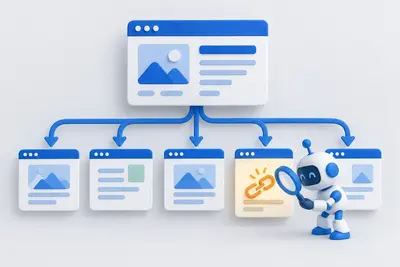
Website crawler
Follow internal links and check up to 100 pages for errors, duplicate titles and thin content.
Open tool
Test robots.txt
Paste rules and enter URLs to see which pages are blocked and which rule applies.
Open tool
Website launch package
Fill in one form to create meta tags, Open Graph, schema markup, a favicon, robots.txt and a sitemap in one package.
Open tool
Create Open Graph tags
Create preview images and text for WhatsApp, Facebook and LinkedIn, with a preview for each network.
Open tool